Building Realistic Scenery: Creating Trees, Fields, and Water Features
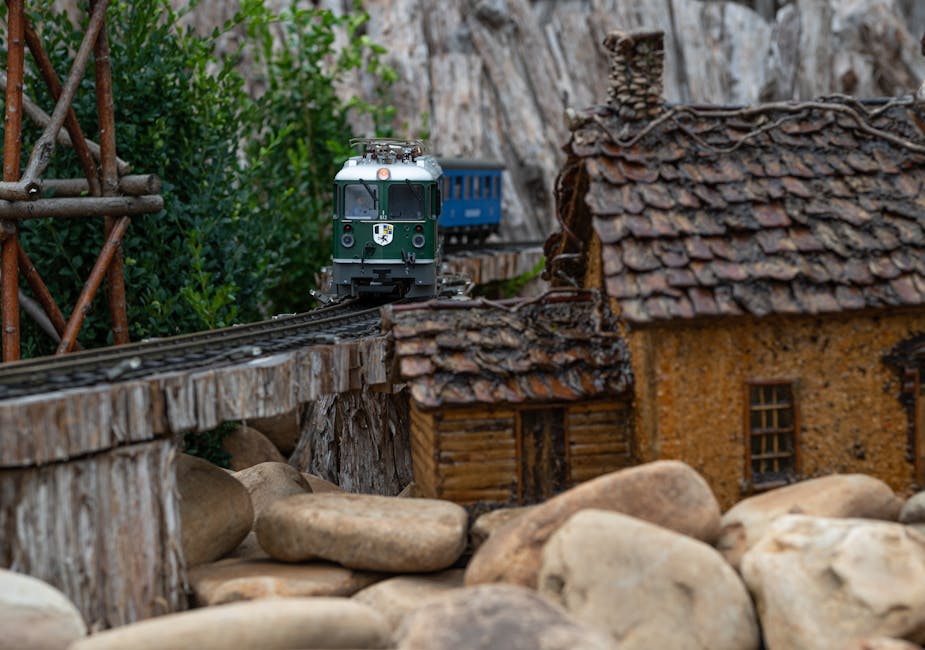
A model railway layout is only as good as its scenery. Even the finest locomotives and rolling stock look unconvincing if they're running through a barren landscape. Creating realistic scenery is one of the most rewarding aspects of the hobby, and fortunately, you don't need expensive specialist materials to achieve excellent results.
Trees and Vegetation are fundamental to any landscape. Commercial model trees are available, but many experienced modellers make their own using foam or plastic armatures covered with lichen, foam, or flock. Sea foam, when painted and flocked appropriately, creates convincing tree canopies at a fraction of the cost. For grass and undergrowth, flock materials in various greens and browns can be applied over painted baseboards using spray adhesive. Layer different shades of flock to create depth and natural variation—real landscapes are never uniformly one colour.
Water Features add significant visual interest. Ponds and streams can be created using casting resin, which gives a realistic glossy finish. Begin by sculpting the water course from plaster or carved foam, then seal it with a primer. Pour the resin carefully and allow it to set fully. For moving water effects, some modellers use clear silicone caulk applied in layers, which photographs well even if it doesn't move. Always ensure water features are at the lowest point of your landscape—gravity should be your guide.
Rock Formations and Hills form the backbone of terrain. Use polystyrene sheets carved with a hot wire tool, or build up plaster over a wooden frame. Rock faces can be textured with a wire brush before painting, then dry-brushed with multiple shades of grey and brown to suggest stratification. Real rocks have complex colouring, so resist the temptation to use uniform paint—variation is key.
Roads and Paths should show wear. Rather than painting a uniform grey, apply a base coat, then add darker streaks where traffic would wear the surface. Dust and dirt accumulate along verges, so dry-brush lighter colours at edges. Small details like gravel texture, painted lines, and occasional puddles transform a flat surface into something believable.
Seasonal Considerations affect your colour palette. Spring and summer layouts use brighter greens, whilst autumn requires golds, oranges, and browns. Winter layouts benefit from careful use of white flock for snow, though this requires a completely different colour scheme throughout.
Start small with a corner section of your layout, experimenting with techniques before committing to the whole scene. Photograph prototype landscapes to understand how real scenery uses colour, texture, and variation. Your model railway will reward the effort invested in scenery with a truly immersive experience.